Innovation
Serial entrepreneurs
We've started companies, built products from nothing and taken them to market. We know a system only counts once a team has adopted it.
 Mahal Systems
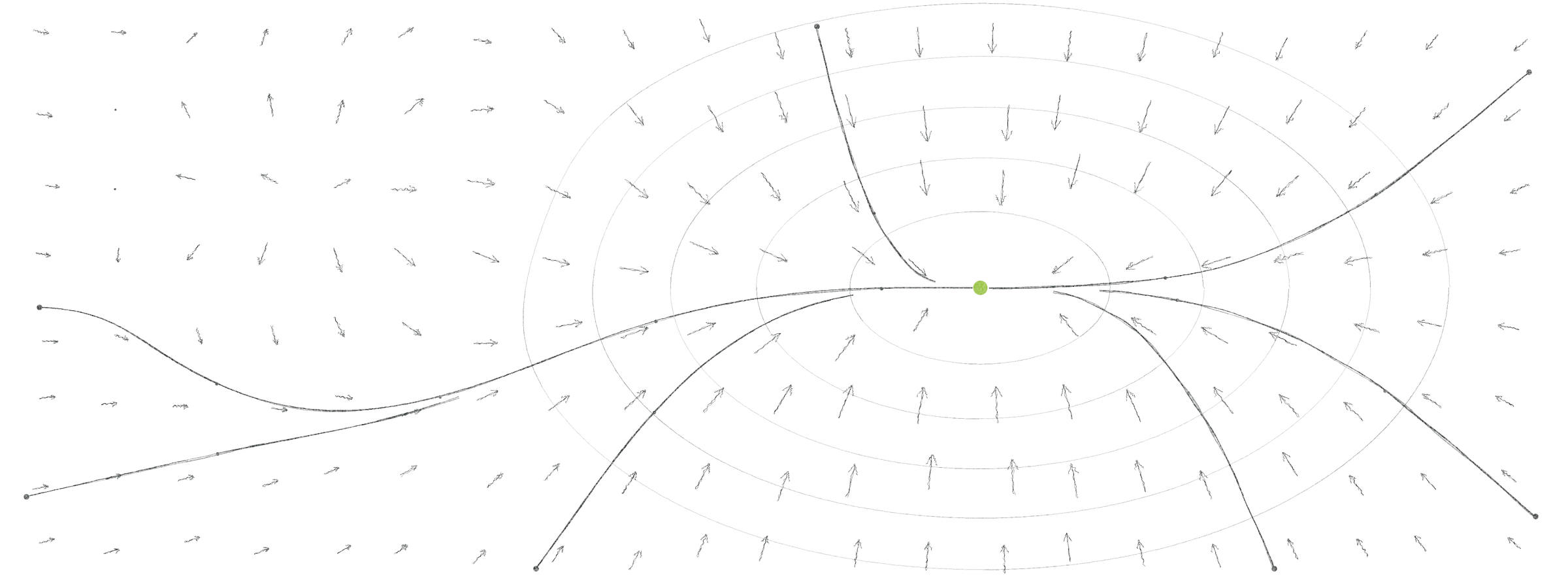 θ*
θ0
∇Q
About us
Mahal Systems was founded by serial entrepreneurs. We've spent our careers designing systems, working with data and building AI, and shipping all of it inside large enterprises.
Innovation
We've started companies, built products from nothing and taken them to market. We know a system only counts once a team has adopted it.
Expertise
Deep technical expertise in system design, data and AI: the architecture, the pipelines and the models, and the math that ties them to an objective.
Experience
We've worked with hundreds of scaled enterprises on their data and AI. We know how work gets shipped, reviewed and approved inside a large company, and we build for that.
Tell us about your agents and what they should get better at.
or email hello@mahalsystems.ai
Why "Mahalanobis"
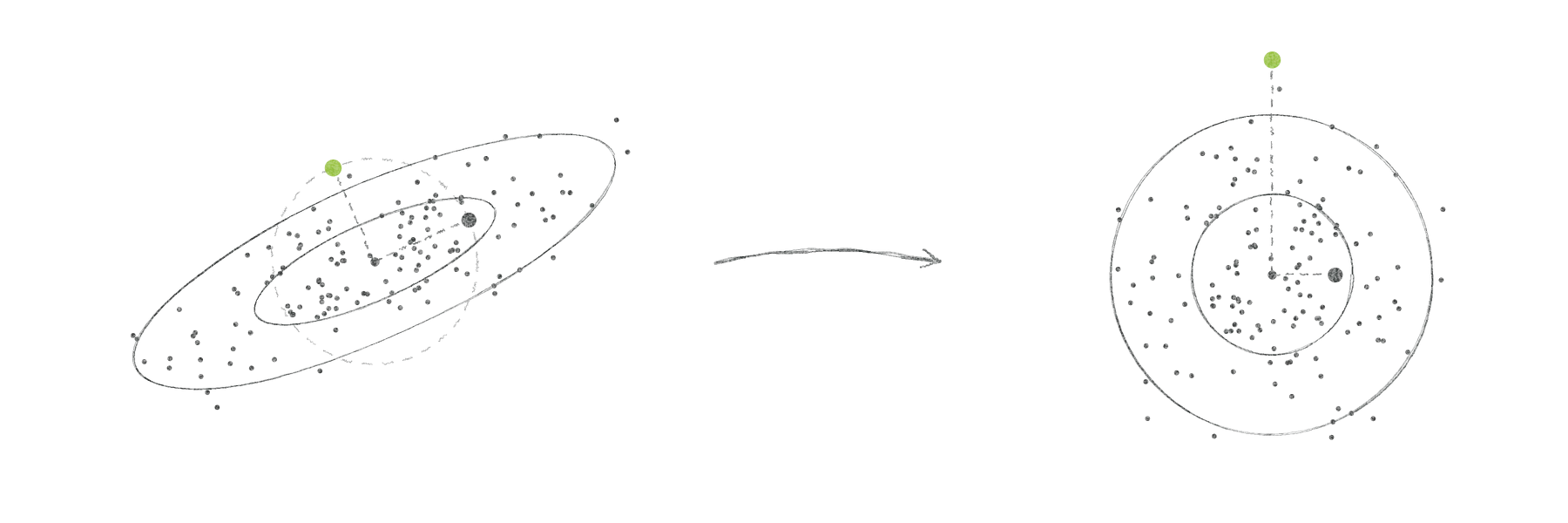
In 1936 the Indian statistician Prasanta Chandra Mahalanobis asked a simple question: how far apart are two things, once you account for how much they naturally vary? His answer, the Mahalanobis distance, measures distance in units of the data's own spread. A step along a noisy direction counts for little. The same step along a quiet direction counts for a lot.
 μ
a
b
same ruler distance
whiten
μ
d = 0.8
d = 2.7
Ninety years later the idea sits underneath modern AI:
The Mahalanobis distance is ordinary distance after rotating data onto its principal components and rescaling each one. Learn that transformation from examples instead, and you have metric learning. Replace it with a neural network, and you have the embedding models behind search and retrieval today.
It is a standard way to tell when a model is looking at an input unlike anything it was trained on, or when a reward model is being gamed.
Fine-tuning a language model with human feedback keeps the new model close to the original with a KL penalty. For small changes, that penalty is a Mahalanobis distance between the two sets of weights.
That's the question we ask of every change to an agent: is it a real improvement, or noise? We measure each change in units of how much the agent already varies, and keep what's real. Mahalanobis built the Indian Statistical Institute to measure things carefully at national scale. We named the company after him because that's the job.
We could talk about covariance matrices all day. Tell us what you're measuring, and how you'd know a change is real.
or email hello@mahalsystems.ai